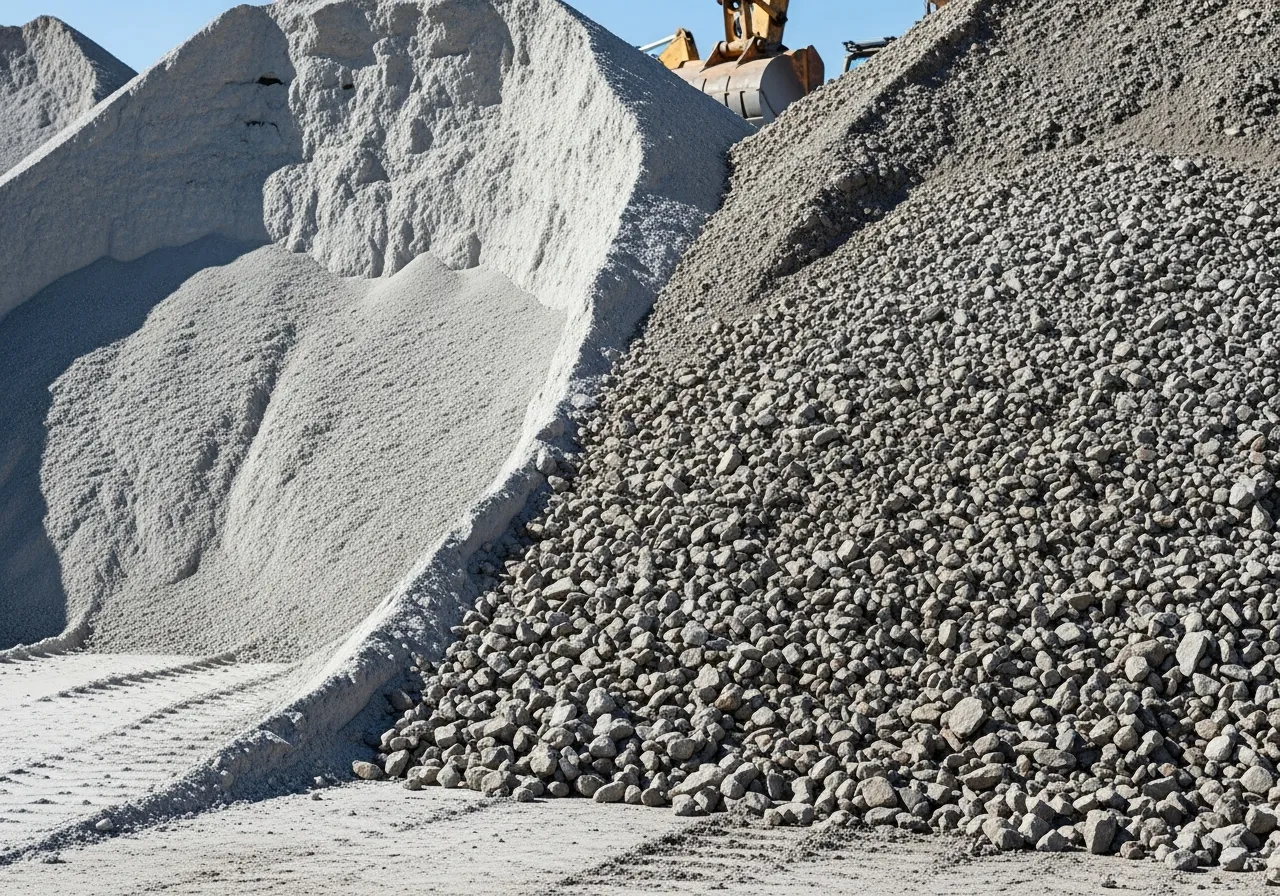
Walk into any Gold Coast aggregate yard and you'll see piles of crusher dust and piles of road base. They look almost the same. They're not. Using the wrong one ruins your job.
Crusher dust — fine, locks tight, holds water
- Particle size: 0–5mm
- Compacts very tight, almost like concrete when watered
- Holds moisture — drains slowly
- Best for: paver bedding, shed slabs, top dressing on paths
- Avoid for: load-bearing driveway base, stormwater drainage
If you're laying pavers and you want them locked in place forever, crusher dust is your friend. If you need water to flow through the base, it isn't.
Road base — graded for engineering
- Particle size: 0–20mm or 0–40mm graded mix
- Compacts to high density when properly laid
- Drains better than crusher dust (depending on grade)
- Best for: driveway base, slab sub-base, hardstand, road construction
- Avoid for: paver bedding, decorative finishes
Road base is engineered to hit specific compaction and bearing-capacity targets. It's the workhorse of any commercial-grade build.
Common Gold Coast jobs and which to use
- Concrete driveway base: road base (RC 20mm or RCA 20-40mm)
- Paver driveway base: road base under, crusher dust as bedding layer
- Garden shed slab: crusher dust 50-75mm
- House slab sub-base: road base 100-150mm in compacted lifts
- Path or stepping stones: crusher dust 50mm
- Stormwater pit base: drainage aggregate (not crusher dust!)
Recycled crusher dust and recycled concrete road base perform identically to virgin product on residential work — and cost $15–25/m³ less. Smart choice for builders watching the budget.
How much do you need?
Rough rule: m² × depth in m = m³. So a 4m × 5m shed slab at 75mm = 4 × 5 × 0.075 = 1.5m³ of crusher dust. We deliver from 1m³ tipper loads upwards across the Gold Coast.